
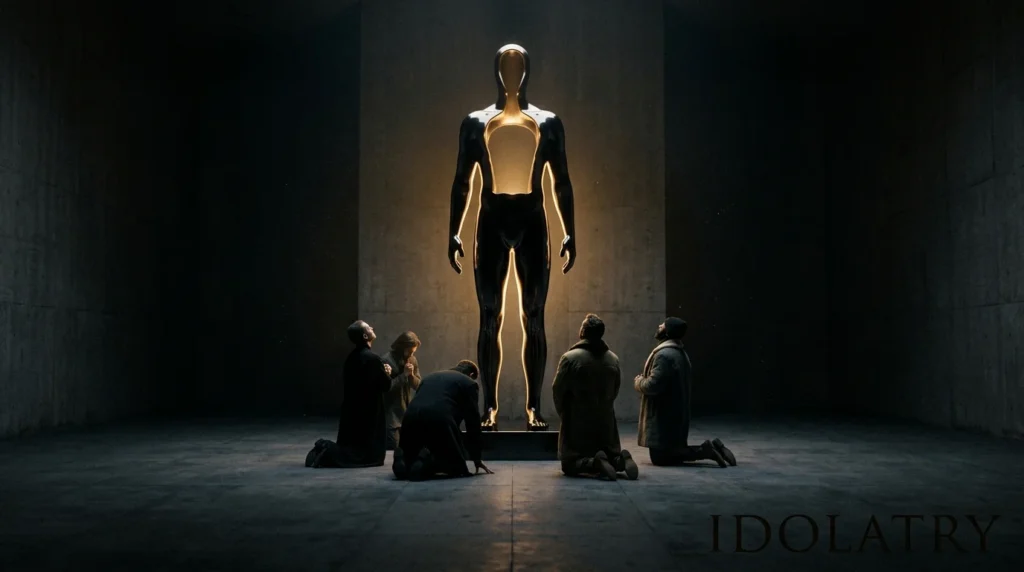
A metaphor for idolatry helps describe the idea of giving excessive admiration, loyalty, or importance to something that becomes more powerful in a person’s life than it should be. While idolatry is often connected with religious worship, the word is also used in a broader sense to describe extreme devotion to money, fame, success, beauty, power, or people.
People search for metaphors for idolatry because they want creative ways to explain misplaced devotion and unhealthy attachment. Instead of simply saying someone is obsessed with something, a metaphor can create a stronger image, such as a golden cage, a false altar, or a hungry shadow that demands attention.
Metaphors help writers, speakers, and thinkers explore how admiration can become obsession. They show how something that begins as appreciation can grow into control, dependence, or a replacement for deeper values.
This guide shares powerful idolatry metaphors with meanings, examples, and alternative expressions for writing, discussions, and analysis.
Definition & Meaning
A metaphor for idolatry compares excessive devotion or misplaced worship to another image without using “like” or “as.”
Examples:
- Fame became a golden idol on his throne.
- Money became a false god in her life.
- His ambition was a hungry fire.
These metaphors represent obsession, misplaced priorities, and extreme attachment.
Why We Use Metaphors for Idolatry
Idolatry metaphors help people:
- Explain obsession clearly.
- Describe unhealthy attachment.
- Analyze characters and stories.
- Discuss values and priorities.
- Express moral or emotional ideas.
From real-life experience, people can sometimes give too much importance to things that promise happiness, success, or acceptance. Metaphors make these invisible struggles easier to understand.
72+ Metaphors for Idolatry
| Metaphor | Meaning | Example Sentence | Other Ways to Say |
|---|---|---|---|
| A Golden Cage | Something attractive that controls you | Wealth became a golden cage around his freedom. | Beautiful trap, false freedom |
| A False Altar | Something receiving misplaced devotion | Fame became a false altar in her life. | Wrong priority, misplaced worship |
| A Hungry Fire | A desire that never feels satisfied | His ambition was a hungry fire consuming everything. | Endless desire, obsession |
| A Golden Idol | An object of excessive admiration | Success became a golden idol he worshiped. | Obsession, fixation |
| A Hollow Crown | Power without true meaning | Fame was a hollow crown on his head. | Empty achievement, false glory |
| A Shadow That Follows | Constant obsession | His desire for perfection was a shadow that followed him. | Attachment, fixation |
| A Thirsty Desert | Endless craving | Her need for approval was a thirsty desert. | Endless hunger, longing |
| A Prison Made of Gold | Wealth controlling a person | Luxury became a prison made of gold. | Material trap, dependence |
| A Mirror of Vanity | Obsession with appearance | His image became a mirror of vanity. | Self-obsession, pride |
| A False Compass | Leading someone in the wrong direction | Fame became a false compass for his choices. | Wrong guide, misleading goal |
| A Hungry Monster | Desire that grows uncontrollably | Greed became a hungry monster. | Uncontrolled desire, obsession |
| A Heavy Chain | Something that controls you | His addiction to success became a heavy chain. | Burden, control |
| A Silent Master | Something secretly controlling decisions | Money became a silent master of his life. | Hidden power, influence |
| A Beautiful Trap | Attractive but harmful attachment | Fame was a beautiful trap. | Temptation, illusion |
| A Burning Furnace | Consuming passion | His pursuit of status was a burning furnace. | Intense desire, obsession |
| A False Sunrise | Hope based on the wrong thing | Wealth was a false sunrise promising happiness. | Empty promise, illusion |
| A Painted Mask | False appearance | Popularity became a painted mask hiding reality. | False image, appearance |
| A Hungry Ocean | Endless need | His desire for attention was a hungry ocean. | Endless craving, greed |
| A Golden Prison | Wealth or success limiting freedom | Success became a golden prison. | Luxury trap, limitation |
| A Distant Star | Something admired too much | Fame became a distant star he chased forever. | Unreal goal, obsession |
| A Puppet Master | Something controlling actions | Money became the puppet master of his choices. | Control, influence |
| A False Treasure Map | Leading toward the wrong goal | Greed was a false treasure map. | Misguided pursuit, illusion |
| A Storm of Desire | Overwhelming wants | His ambition became a storm of desire. | Strong craving, obsession |
| A Desert Without Water | Never satisfied | His hunger for praise was a desert without water. | Endless need, emptiness |
| A Locked Room | Being trapped by devotion | His obsession became a locked room. | Restriction, captivity |
Types of Idolatry Metaphors
Metaphors for Material Idolatry
These describe excessive attachment to possessions:
- Golden cage
- Golden prison
- False treasure map
- Hollow crown
Example:
Wealth became a golden prison that limited his choices.
Metaphors for Fame and Status
These describe obsession with recognition:
- False altar
- Painted mask
- Distant star
- Hollow crown
Example:
Fame became a hollow crown that never brought peace.
Metaphors for Personal Obsession
These describe unhealthy attachment:
- Hungry fire
- Heavy chain
- Puppet master
- Hungry monster
Example:
His ambition became a puppet master controlling every decision.
Real-Life Conversations
Friends
Emma: Why does he care so much about being famous?
Liam: It seems like fame has become a golden idol for him.
Emma: Maybe he forgot what really matters.
Classroom Discussion
Teacher: What does the character’s obsession represent?
Student: His desire for power is a hungry fire that destroys everything around him.
Workplace
Employee: Some people sacrifice their whole life for promotions.
Manager: Yes, success can become a golden cage if it controls every choice.
Everyday Usage
Idolatry metaphors can be used in:
- Literature analysis
- Essays
- Speeches
- Religious discussions
- Social commentary
- Creative writing
Examples:
Instead of:
He cares too much about money.
Write:
Money became a false master controlling his decisions.
Instead of:
She is obsessed with fame.
Write:
Fame became a golden idol standing above everything else.
Common Mistakes
| Mistake | Correction |
|---|---|
| Using idolatry only for religion | It can also describe extreme admiration of worldly things. |
| Making every admiration negative | Appreciation and obsession are different. |
| Using harsh language without context | Choose metaphors that match the situation. |
| Ignoring the deeper meaning | Idolatry metaphors often involve values and priorities. |
Multiple Choice Questions
Q1: “A golden cage” represents:
A. Attractive but controlling attachment
B. Complete freedom
C. A physical home
D. Happiness only
Answer: A
Q2: “A false altar” means:
A. Misplaced devotion
B. A place of learning
C. A celebration
D. A friendship
Answer: A
Q3: “A hungry fire” represents:
A. Endless desire
B. Peace
C. Rest
D. Silence
Answer: A
Q4: “A hollow crown” suggests:
A. Empty achievement
B. True happiness
C. Friendship
D. Humility
Answer: A
Q5: “A puppet master” represents:
A. Something controlling actions
B. A creative person
C. A helper
D. A teacher
Answer: A
Frequently Asked Questions
Q1: What is a good metaphor for idolatry?
A golden idol, false altar, golden cage, and hungry fire are strong metaphors for idolatry.
Q2: Can idolatry describe non-religious things?
Yes. It can describe extreme devotion to money, fame, success, beauty, or power.
Q3: What metaphor represents obsession?
A hungry fire, hungry monster, or heavy chain can represent obsession.
Q4: What metaphor describes materialism?
A golden cage or golden prison represents being controlled by wealth or possessions.
Q5: Why are metaphors useful for explaining idolatry?
They turn abstract ideas about devotion and obsession into clear images people can understand.
Conclusion
Metaphors for idolatry help explain how admiration can become unhealthy attachment. Something valued too highly can become a golden cage, a false altar, a hungry fire, or a hollow crown.
These expressions help writers and speakers explore themes of obsession, priorities, power, and human desire. A strong metaphor reveals not only what people value but also how those values influence their choices.