
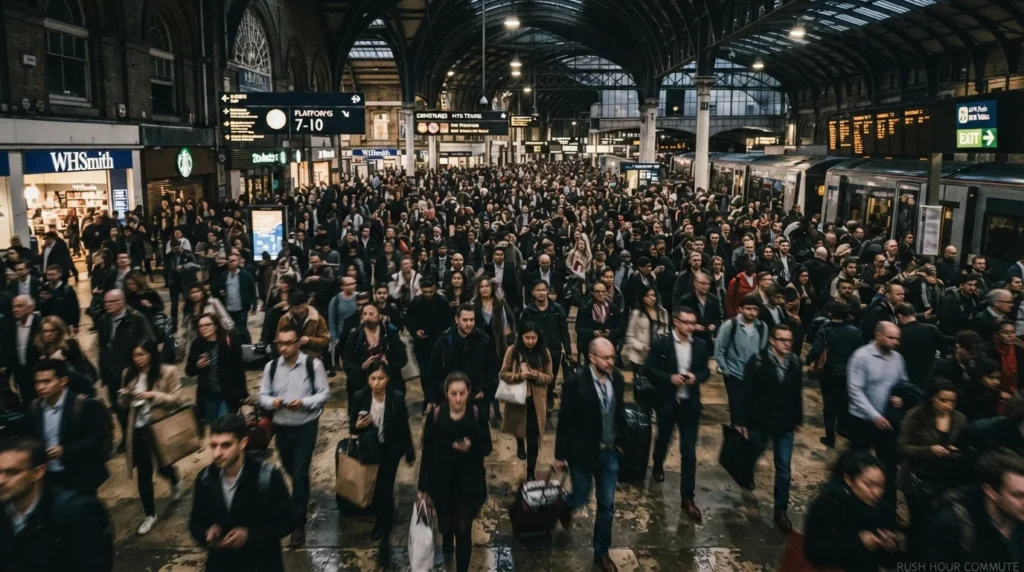
A crowded place is full of people, activity, and movement. It could be a busy market, a packed stadium, a bustling train station, or a lively festival. Instead of simply saying a place is crowded, metaphors for crowded places help create vivid images that make your writing more engaging and memorable.
Many people search for metaphors for crowded places when writing stories, essays, poems, speeches, travel blogs, or social media captions. A strong metaphor can help readers picture the energy, noise, and excitement of a busy location.
Metaphors compare one thing to another without using the words “like” or “as.” From real-life experience, saying “The market was a beehive” paints a much clearer picture than saying “The market was very crowded.” In everyday conversations, people often use figurative language to describe packed streets, busy events, and bustling cities. Creative writers often use metaphors to capture the atmosphere of lively places.
Definition and Meaning
What Are Metaphors for Crowded Places?
Metaphors for crowded places are figures of speech that compare a busy location to another object, place, or scene without using “like” or “as.”
For example, instead of saying a shopping mall was full of people, you could say “The mall was a beehive.” This metaphor suggests constant movement, noise, and activity.
How Do They Work?
A metaphor replaces a literal description with a symbolic image. It helps readers imagine the number of people, the movement, and the atmosphere.
For example, describing a stadium as an ocean of people emphasizes the enormous crowd stretching in every direction.
Why Do People Use Them?
People use metaphors because they:
- create vivid mental images
- make descriptions more engaging
- improve storytelling
- add emotion to writing
- simplify complex scenes
- make writing more memorable
Why We Use Metaphors for Crowded Places
Busy places can feel exciting, overwhelming, or energetic. Using metaphors for crowded places helps describe these experiences in creative and meaningful ways.
Daily Conversations
In everyday conversations, metaphors make descriptions of busy streets, shopping centers, and events more interesting.
Creative Writing
Creative writers often use metaphors about crowded places to build vivid settings and realistic scenes.
Storytelling
Stories become more immersive when crowded locations are described through symbolic imagery.
Poems
Poets use figurative language for crowded places to express movement, excitement, chaos, or celebration.
Essays
Students often include metaphors for crowded places examples in descriptive essays and travel writing.
Social Media Captions
Creative ways to describe crowded places make travel photos and event posts more engaging.
Professional Communication
Journalists, bloggers, and speakers use expressions for crowded places to describe festivals, conferences, sporting events, and city life.
Best Metaphors for Crowded Places Examples
1. Metaphor: A Beehive
Meaning: Full of busy people and constant activity.
Example sentence: The marketplace was a beehive from morning until sunset.
Alternatives: Busy hive; Buzzing colony
2. Metaphor: An Ocean of People
Meaning: An enormous crowd stretching far and wide.
Example sentence: The concert became an ocean of people.
Alternatives: Sea of faces; Human ocean
3. Metaphor: A Can of Sardines
Meaning: Extremely packed with little space.
Example sentence: The subway was a can of sardines during rush hour.
Alternatives: Packed container; Tight squeeze
4. Metaphor: An Ant Colony
Meaning: Many people moving with purpose.
Example sentence: The airport was an ant colony before the holidays.
Alternatives: Busy ants; Swarming colony
5. Metaphor: A Human River
Meaning: People moving continuously in one direction.
Example sentence: A human river flowed through the station.
Alternatives: Flowing crowd; Moving stream
6. Metaphor: A Jungle
Meaning: Busy, noisy, and difficult to navigate.
Example sentence: The shopping mall became a jungle on the weekend.
Alternatives: Urban jungle; Wild maze
7. Metaphor: A Swarm
Meaning: A large group moving together.
Example sentence: Tourists formed a swarm around the monument.
Alternatives: Mass; Cluster
8. Metaphor: A Boiling Pot
Meaning: Full of energy and activity.
Example sentence: The city square was a boiling pot during the festival.
Alternatives: Bubbling pot; Busy cauldron
9. Metaphor: A Living Machine
Meaning: Everyone works together in constant motion.
Example sentence: The factory floor was a living machine.
Alternatives: Working engine; Giant mechanism
10. Metaphor: A Maze
Meaning: Difficult to move through because of the crowd.
Example sentence: The market became a maze of people.
Alternatives: Labyrinth; Twisting paths
11. Metaphor: A Tidal Wave
Meaning: A powerful rush of people.
Example sentence: A tidal wave of fans entered the stadium.
Alternatives: Human surge; Great wave
12. Metaphor: A Forest
Meaning: So many people that they resemble countless trees.
Example sentence: The audience was a forest of heads.
Alternatives: Woodland; Grove
13. Metaphor: A Puzzle
Meaning: People fit together closely.
Example sentence: The commuters became a giant puzzle.
Alternatives: Mosaic; Interlocking pieces
14. Metaphor: A Carnival
Meaning: Full of excitement and activity.
Example sentence: The street fair was a carnival of people.
Alternatives: Celebration; Festival
15. Metaphor: A Web
Meaning: People are connected and crossing paths.
Example sentence: The station became a web of travelers.
Alternatives: Network; Mesh
16. Metaphor: A Whirlpool
Meaning: Crowds moving in every direction.
Example sentence: The entrance became a whirlpool of visitors.
Alternatives: Vortex; Spiral
17. Metaphor: A Storm
Meaning: Loud, fast-moving, and overwhelming.
Example sentence: The crowd was a storm after the game ended.
Alternatives: Tempest; Thunderstorm
18. Metaphor: A Furnace
Meaning: Crowded, hot, and uncomfortable.
Example sentence: The packed train became a furnace.
Alternatives: Oven; Heat chamber
19. Metaphor: A Marketplace of Voices
Meaning: Filled with conversations and noise.
Example sentence: The café was a marketplace of voices.
Alternatives: Chorus; Sea of chatter
20. Metaphor: A Blanket
Meaning: Crowds completely cover an area.
Example sentence: People formed a blanket across the square.
Alternatives: Covering; Layer
21. Metaphor: A Living Sea
Meaning: A crowd constantly shifting and moving.
Example sentence: The parade drew a living sea of spectators.
Alternatives: Rolling crowd; Human tide
22. Metaphor: A Magnet
Meaning: A place that attracts many people.
Example sentence: The new mall became a magnet for shoppers.
Alternatives: Attraction; Crowd-puller
23. Metaphor: A Wall
Meaning: A crowd blocks movement.
Example sentence: A wall of people stood at the entrance.
Alternatives: Barrier; Human wall
24. Metaphor: A Firework Display
Meaning: Bright, energetic, and lively.
Example sentence: The festival was a firework display of people and colors.
Alternatives: Celebration; Spectacle
25. Metaphor: A Train Engine
Meaning: Constant movement and momentum.
Example sentence: The morning commute was a train engine that never stopped.
Alternatives: Machine; Locomotive
26. Metaphor: A Giant Quilt
Meaning: Many different people gathered together.
Example sentence: The park became a giant quilt of families and friends.
Alternatives: Patchwork; Mosaic
27. Metaphor: A Hive of Voices
Meaning: Filled with conversation and sound.
Example sentence: The conference hall was a hive of voices.
Alternatives: Buzzing room; Chattering hive
28. Metaphor: A Waterfall
Meaning: A continuous flow of people.
Example sentence: Visitors poured through the gates in a waterfall of movement.
Alternatives: Cascade; Flow
29. Metaphor: A Melting Pot
Meaning: People from many backgrounds gathered together.
Example sentence: The city center was a melting pot of cultures.
Alternatives: Cultural mix; Diverse community
30. Metaphor: A Packed Puzzle Box
Meaning: Every available space is filled.
Example sentence: The elevator became a packed puzzle box.
Alternatives: Tight container; Full box
31. Metaphor: A Living Tapestry
Meaning: Many people create a colorful scene.
Example sentence: The festival became a living tapestry of cultures.
Alternatives: Colorful mosaic; Human artwork
32. Metaphor: A Marketplace of Dreams
Meaning: A place full of hopeful and active people.
Example sentence: The job fair was a marketplace of dreams.
Alternatives: Opportunity hub; Career crossroads
33. Metaphor: A Roaring River
Meaning: A loud and fast-moving crowd.
Example sentence: The stadium exits became a roaring river of fans.
Alternatives: Human current; Flowing stream
34. Metaphor: A Busy Nest
Meaning: A place full of constant activity.
Example sentence: The daycare was a busy nest of children.
Alternatives: Home of activity; Lively nest
35. Metaphor: A Spider’s Web
Meaning: People moving in many connected directions.
Example sentence: The airport terminal became a spider’s web of travelers.
Alternatives: Network; Interwoven paths
36. Metaphor: A Symphony
Meaning: Many people creating one lively atmosphere.
Example sentence: The marketplace was a symphony of voices and footsteps.
Alternatives: Orchestra; Harmony
37. Metaphor: A Living Puzzle
Meaning: Every person adds to the whole scene.
Example sentence: The festival crowd became a living puzzle.
Alternatives: Human mosaic; Patchwork
38. Metaphor: A City Heartbeat
Meaning: A crowded place full of life and energy.
Example sentence: The downtown square was the city’s heartbeat.
Alternatives: Pulse; Center of life
Real-Life Conversations
Friends Talking
Emma: Was the concert crowded?
Ryan: It was an ocean of people. I could barely see the stage.
Emma: It must have been an amazing experience.
Student and Teacher
Student: Why did the author call the market a beehive?
Teacher: Because everyone was busy, moving around, and working, just as bees do in a hive.
Student: That makes the scene much easier to imagine.
Workplace Colleagues
Sarah: How was the conference?
David: The exhibition hall was a hive of voices all day.
Sarah: Sounds like a great networking event.
Everyday Usage Guide
Speaking
Use metaphors for crowded places to describe busy markets, events, streets, schools, airports, and public transportation.
Essays
In essays, metaphors help create detailed settings and make descriptions more vivid.
Poems
Poets often use figurative language for crowded places to symbolize energy, movement, celebration, or even chaos.
Instagram and Facebook Captions
Creative ways to describe crowded places make travel, festival, and city-life posts more engaging.
Professional Writing
Journalists, bloggers, travel writers, and speakers use expressions for crowded places to create stronger descriptions of public events and urban environments.
Common Mistakes
| Wrong Usage | Correct Version | Short Explanation |
|---|---|---|
| The stadium was like an ocean of people. | The stadium was an ocean of people. | Using “like” creates a simile instead of a metaphor. |
| The market was a beehive, a rocket, and a sandwich. | The market was a beehive. | Avoid mixing unrelated metaphors. |
| The crowd was a feather. | The crowd was a tidal wave. | Choose comparisons that match size and movement. |
| Using confusing metaphors. | Use familiar and meaningful comparisons. | Readers should picture the scene easily. |
| Repeating the same metaphor throughout your writing. | Use different metaphors where appropriate. | Variety makes writing more engaging. |
| Using a metaphor that doesn’t fit the setting. | Match the metaphor to the atmosphere. | The comparison should support your description. |
Frequently Asked Questions
What are metaphors for crowded places?
Metaphors for crowded places are creative comparisons that describe busy locations without using “like” or “as.”
Why do writers use metaphors for crowded places?
They create vivid imagery and help readers imagine the energy, movement, and atmosphere of a location.
Where can I use metaphors for crowded places?
You can use them in stories, essays, travel blogs, poems, speeches, and social media captions.
What is the difference between a metaphor and a simile?
A metaphor makes a direct comparison, while a simile uses words such as “like” or “as.”
How can I create my own metaphor for a crowded place?
Think about what the crowd reminds you of—such as a beehive, ocean, river, or storm—and compare the place directly to that image.
Are metaphors for crowded places suitable for formal writing?
Yes. When used appropriately, they can strengthen essays, travel writing, speeches, and descriptive reports.
Conclusion
Metaphors for crowded places make ordinary descriptions far more vivid by turning busy locations into memorable images. Whether a crowd is a beehive, an ocean of people, a human river, or a city heartbeat, each metaphor highlights a different aspect of movement, energy, or excitement. Using metaphors for crowded places examples, metaphors about crowded places, figurative language for crowded places, creative ways to describe crowded places, and expressions for crowded places can make your writing more engaging and easier to visualize.
The next time you describe a packed market, a lively festival, or a bustling city street, try using one of these metaphors. A well-chosen comparison can help readers feel the energy of the crowd and bring your writing to life.