
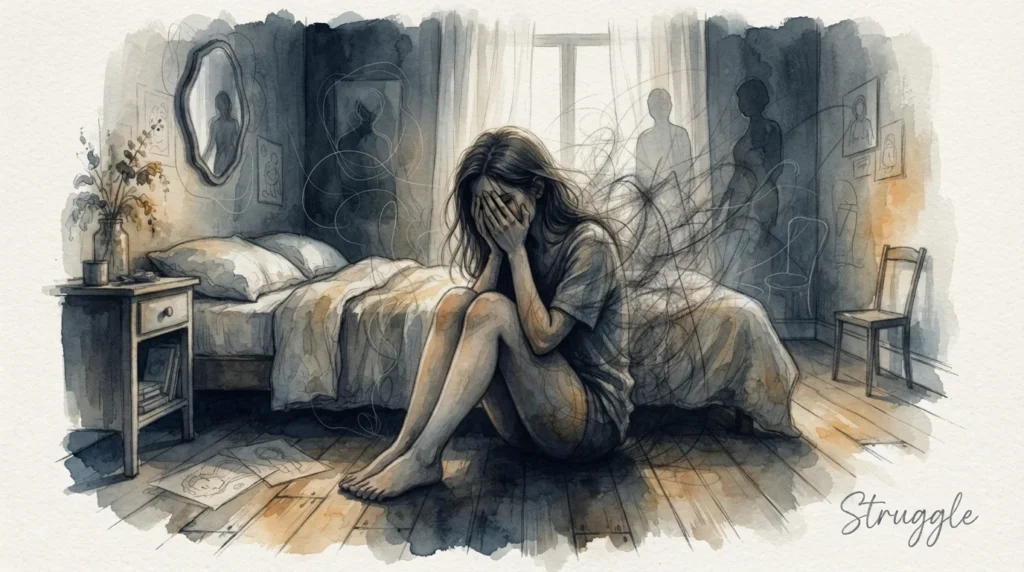
A metaphor for eating disorders can help writers describe the emotional struggle, confusion, fear, isolation, or loss of control that may surround an eating disorder. Because eating disorders are serious mental and physical health conditions, metaphors should be used with care and should not make the illness sound beautiful, desirable, or romantic.
People may search for metaphor for eating disorders when writing a personal essay, poem, story, awareness article, or school assignment. A metaphor can give language to feelings that are sometimes difficult to explain directly.
From real-life experience, emotional struggles are not always easy to put into words. A person may feel trapped by thoughts, overwhelmed by pressure, or separated from people who want to help. In everyday conversations, direct and respectful language is often best. Creative writers often use metaphors when they need to explore those feelings in a deeper way.
The most useful metaphors focus on the experience of struggling and recovering, rather than describing harmful behaviors in detail. Images such as storms, cages, shadows, tangled knots, and locked doors can communicate emotional difficulty without glamorizing the disorder.
This article provides 25 thoughtful metaphor for eating disorders examples, along with simple meanings, natural sentences, and alternative expressions.
Definition and Meaning
A metaphor for eating disorders is a figurative comparison used to describe the emotional, psychological, or social experience of living with an eating disorder.
For example:
Metaphor: An eating disorder is a storm in the mind.
Meaning: The metaphor describes the confusion, fear, and emotional difficulty that can make clear thinking difficult.
The eating disorder is not literally a storm. The comparison helps readers understand how overwhelming the experience can feel.
Metaphors can also describe recovery.
For example, a person may describe recovery as finding a path through a forest. This image suggests that recovery can involve uncertainty, patience, support, and gradual progress.
When writing about eating disorders, it is important to avoid metaphors that praise weight loss, restriction, starvation, purging, or other harmful behaviors. The goal should be understanding, awareness, empathy, and hope.
Why We Use Metaphors for Eating Disorders
Metaphors can help people communicate complicated emotions without describing every detail of an experience.
Daily Conversations
In everyday conversations, direct and respectful language is usually the clearest choice. However, a simple metaphor may help someone explain how overwhelmed or trapped they feel.
Creative Writing
Writers may use metaphors to explore fear, shame, isolation, identity, recovery, or the desire for control.
A character might feel as though they are “walking through a maze” when they cannot see a clear way forward.
Storytelling
Metaphors can show how a character changes throughout a story.
A character might begin inside “a locked room” and gradually find “a door back to the world.” This can represent the movement from isolation toward recovery.
Poems
Poetry often uses metaphor to express emotions that are difficult to explain directly.
Storms, shadows, cages, mirrors, mazes, and tangled threads can represent different parts of the emotional experience.
Essays
Metaphors can make personal and awareness essays more powerful. They can help readers understand an emotional experience without turning the subject into entertainment.
Social Media Captions
Short metaphors can be useful in awareness posts, especially when the message encourages compassion and recovery.
However, avoid captions that could accidentally romanticize eating disorders or harmful behaviors.
Professional Communication
In professional or educational writing, metaphors should support clear information rather than replace it. When discussing a medical or mental health topic, direct facts should remain important.
Best Metaphor for Eating Disorders Examples
Here are 25 respectful metaphors about eating disorders that focus on emotional struggle, isolation, and recovery.
1. An Eating Disorder Is a Storm in the Mind
Meaning: This metaphor describes the disorder as an overwhelming mental and emotional struggle.
Example sentence: The eating disorder felt like a storm in her mind that made every day harder.
Alternatives: A mental storm; an emotional hurricane
2. An Eating Disorder Is a Locked Room
Meaning: This metaphor represents feeling trapped and unable to escape harmful thoughts.
Example sentence: For a long time, the disorder felt like a locked room with no obvious door.
Alternatives: A mental prison; a closed room
3. An Eating Disorder Is a Shadow
Meaning: This metaphor shows how the struggle can follow someone through different parts of life.
Example sentence: The disorder became a shadow that followed him through ordinary days.
Alternatives: A constant shadow; a dark presence
4. An Eating Disorder Is a Tangled Knot
Meaning: This metaphor represents complicated thoughts and emotions that are difficult to separate.
Example sentence: Her thoughts felt like a tangled knot that became harder to understand over time.
Alternatives: A web of thoughts; a twisted thread
5. An Eating Disorder Is a Maze
Meaning: This metaphor describes feeling lost and unsure how to find a way forward.
Example sentence: Recovery sometimes felt like finding a path through a maze.
Alternatives: A confusing path; a mental labyrinth
6. An Eating Disorder Is a Heavy Backpack
Meaning: This metaphor represents the emotional burden a person may carry.
Example sentence: The disorder felt like a heavy backpack she had carried for years.
Alternatives: An emotional burden; a weight on the mind
7. An Eating Disorder Is a False Compass
Meaning: This metaphor suggests that the disorder can make harmful thoughts seem as though they are giving useful direction.
Example sentence: The disorder became a false compass, pointing him away from the life he wanted.
Alternatives: A misleading guide; a broken compass
8. An Eating Disorder Is a Broken Record
Meaning: This metaphor describes repetitive thoughts that keep returning.
Example sentence: The same fearful thoughts played like a broken record in her mind.
Alternatives: A repeating thought; a stuck message
9. An Eating Disorder Is a Fog
Meaning: This metaphor represents confusion and difficulty seeing situations clearly.
Example sentence: The disorder was a fog that made it difficult for her to see herself clearly.
Alternatives: A mental fog; a cloud of confusion
10. An Eating Disorder Is a Cage
Meaning: This metaphor describes the feeling of being trapped by harmful thoughts or rules.
Example sentence: His thoughts had built a cage around his everyday life.
Alternatives: A mental prison; invisible bars
11. An Eating Disorder Is a Voice That Lies
Meaning: This metaphor represents harmful thoughts that can sound convincing while leading someone away from reality and wellbeing.
Example sentence: She learned that the cruel voice in her head was not telling her the truth.
Alternatives: A deceptive voice; a misleading whisper
12. An Eating Disorder Is a Wall
Meaning: This metaphor represents a barrier between a person and other people or their own feelings.
Example sentence: The disorder became a wall between her and the people who cared about her.
Alternatives: An emotional barrier; an invisible wall
13. An Eating Disorder Is a Thief
Meaning: This metaphor describes how the illness can take away time, energy, relationships, or enjoyment.
Example sentence: The disorder became a thief that slowly stole moments of happiness from his life.
Alternatives: A silent thief; a thief of joy
14. An Eating Disorder Is a Broken Mirror
Meaning: This metaphor represents a distorted or painful view of oneself.
Example sentence: She felt as though she were looking into a broken mirror that could not show her clearly.
Alternatives: A distorted mirror; a fractured reflection
15. An Eating Disorder Is a Prison Without Bars
Meaning: This metaphor describes feeling trapped even when there are no physical barriers.
Example sentence: The illness felt like a prison without bars because nobody else could see the struggle.
Alternatives: An invisible prison; a hidden cage
16. An Eating Disorder Is a Rope Pulling in Two Directions
Meaning: This metaphor represents the conflict between harmful thoughts and the desire to recover.
Example sentence: She felt like a rope being pulled in two directions.
Alternatives: An inner tug-of-war; a divided mind
17. An Eating Disorder Is a Mountain
Meaning: This metaphor describes recovery as a difficult challenge that takes time and effort.
Example sentence: Recovery looked like a mountain, but each small step brought her closer to the top.
Alternatives: A difficult climb; a steep journey
18. An Eating Disorder Is a Dark Tunnel
Meaning: This metaphor represents a difficult period when the future is hard to see.
Example sentence: For a while, recovery felt like walking through a dark tunnel without knowing when the light would appear.
Alternatives: A difficult passage; a long tunnel
19. Recovery Is a Door Opening
Meaning: This metaphor represents the beginning of new possibilities and freedom.
Example sentence: Asking for help felt like a door opening after years of isolation.
Alternatives: A path opening; a new beginning
20. Recovery Is a Path Through the Forest
Meaning: This metaphor shows that recovery can be uncertain but still lead somewhere better.
Example sentence: Recovery was a path through the forest, sometimes unclear but worth following.
Alternatives: A road toward healing; a journey forward
21. Recovery Is Learning to Breathe Again
Meaning: This metaphor represents the feeling of gradually finding space, calm, and freedom.
Example sentence: Recovery felt like learning to breathe again after years of fear.
Alternatives: Finding room to breathe; discovering freedom
22. Recovery Is Untying a Knot
Meaning: This metaphor represents slowly working through complicated thoughts and emotions.
Example sentence: Therapy helped her begin untying the knot of fear and confusion.
Alternatives: Loosening the tangled thread; clearing the confusion
23. Recovery Is Finding the Light
Meaning: This metaphor represents hope and movement toward a healthier future.
Example sentence: With support, he slowly began finding the light beyond the darkness.
Alternatives: Moving toward hope; seeing a brighter path
24. Support Is a Hand Reaching Through the Darkness
Meaning: This metaphor represents the importance of help from trusted people.
Example sentence: Her friend’s support felt like a hand reaching through the darkness.
Alternatives: A helping hand; a light in difficult times
25. Recovery Is Rebuilding a Home Within Yourself
Meaning: This metaphor represents developing a healthier and more accepting relationship with oneself.
Example sentence: Recovery became a journey of rebuilding a home within herself.
Alternatives: Finding peace within; creating a safe inner place
Real-Life Conversations
Metaphors can help people describe difficult emotions, but sensitive subjects should always be discussed with care.
Friends Talking
Maya: You’ve seemed quiet lately. Is everything okay?
Sara: I’m struggling with some thoughts, and they’re becoming overwhelming.
Maya: Do you want to talk about them?
Sara: It feels like there’s a storm in my mind.
Maya: You don’t have to handle it alone. I’m here to listen.
Student and Teacher
Student: I’m trying to write about a character dealing with an eating disorder.
Teacher: What part of the experience are you trying to describe?
Student: I want to show how trapped the character feels.
Teacher: You could describe the disorder as a locked room.
Student: That shows the feeling without describing harmful behavior.
Teacher: Exactly. Keep the focus on the character’s emotions and journey.
Workplace Colleagues
Colleague 1: You mentioned that you’re having a difficult time. How are you doing today?
Colleague 2: I’m taking things one day at a time.
Colleague 1: That’s understandable.
Colleague 2: Recovery feels like a long mountain sometimes.
Colleague 1: You don’t have to climb it alone.
Colleague 2: I appreciate that.
Everyday Usage Guide
When using figurative language for eating disorders, choose metaphors that communicate the emotional experience without glorifying the illness.
In Speaking
Direct language is usually best when discussing eating disorders with someone in real life.
If a person chooses to use a metaphor, listen to what the metaphor means to them instead of assuming its meaning.
In Essays
A metaphor can help a personal or academic essay communicate complex emotions.
Choose one central image and develop it carefully. For example, a maze can represent confusion throughout an essay while the eventual discovery of a path can represent recovery.
In Poems
Poetry gives writers freedom to explore difficult emotions through images.
Storms, shadows, locked doors, broken mirrors, and tangled knots can communicate feelings without describing harmful behaviors.
In Instagram and Facebook Captions
If you are creating an awareness caption, focus on compassion, understanding, and recovery.
Avoid language that makes the illness sound glamorous, powerful, desirable, or aesthetically beautiful.
In Professional Writing
In professional or educational writing, metaphors should support accurate information.
For medical and mental health topics, figurative language should never replace clear explanations about the seriousness of eating disorders or the importance of appropriate support.
Common Mistakes
| Wrong usage | Correct version | Short explanation |
|---|---|---|
| The disorder was like a cage. | The disorder was a cage. | “Like” makes the comparison a simile rather than a direct metaphor. |
| The disorder was a storm, a mountain, a spaceship, and a flower at once. | The disorder was a storm in the mind. | Too many unrelated images can make the writing confusing. |
| The disorder was a beautiful prison. | The disorder was an invisible prison. | Avoid language that makes an illness sound attractive or desirable. |
| Recovery was a magical cure. | Recovery was a long road toward healing. | Recovery is usually a process, not an instant transformation. |
| The eating disorder was a fun adventure. | The eating disorder was a difficult journey. | Avoid romanticizing or trivializing a serious condition. |
| She was an eating disorder. | She was struggling with an eating disorder. | A person should not be reduced to an illness. |
| The illness was a perfect friend. | The illness was a harmful voice that felt difficult to escape. | Avoid presenting the disorder as positive or desirable. |
The strongest metaphors keep the person at the center of the story. They describe the struggle without defining the person’s entire identity by the illness.
Frequently Asked Questions
What is a metaphor for an eating disorder?
It is a figurative comparison used to describe the emotional or psychological experience of struggling with an eating disorder.
Why use metaphors when writing about eating disorders?
Metaphors can help writers communicate complicated feelings such as fear, isolation, confusion, and hope in a memorable way.
What are common metaphors for eating disorders?
Common images include storms, shadows, cages, mazes, tangled knots, broken mirrors, and locked rooms.
Can metaphors make eating disorders sound romantic?
They can if the language presents the illness as beautiful, desirable, powerful, or rewarding. Responsible writing should avoid this.
How can I create my own metaphor?
Think about the emotion or experience you want to describe and compare it with a familiar image that communicates that feeling respectfully.
Are eating disorder metaphors suitable for formal writing?
Yes, when they are clear, respectful, and relevant. In health-related writing, metaphors should support rather than replace accurate information.
Conclusion
A thoughtful metaphor for eating disorders can help describe feelings of fear, confusion, isolation, conflict, and hope when direct words are difficult to find. Images such as storms, cages, shadows, mazes, and tangled knots can communicate the emotional experience while keeping the focus on understanding rather than harmful behavior.
Writers can also use metaphors to describe recovery as a path, an opening door, a light, or a process of rebuilding. Use these creative ways to describe eating disorders carefully and respectfully, especially in essays, poems, stories, and awareness content. Good figurative language should create empathy, encourage understanding, and leave room for hope.