
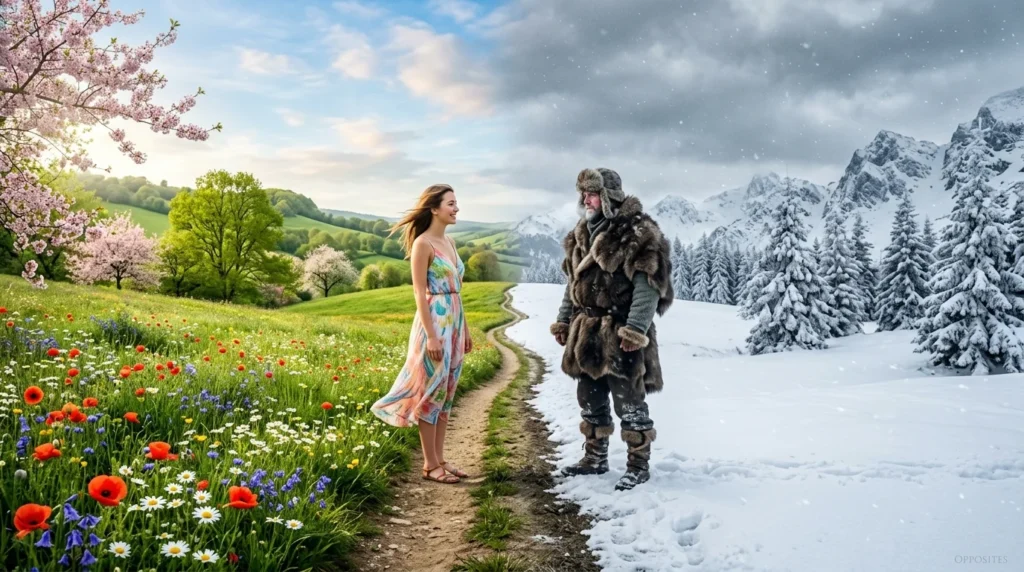
Looking for the perfect metaphor for opposites? Whether you’re writing an essay, story, poem, speech, social media post, or classroom assignment, metaphors can help you describe people, ideas, emotions, or situations that are completely different from one another.
Opposites are everywhere in life. Day and night, fire and ice, success and failure, noise and silence, optimism and pessimism—all show how contrasting forces can exist side by side. Sometimes these differences create conflict, while other times they create balance. Because contrast is such an important part of communication, writers often use metaphors to make opposing ideas easier to understand and more memorable.
For example, instead of saying, “They are very different people,” you could say, “They are fire and ice.” This instantly paints a vivid picture of strong contrast.
A powerful metaphor for opposites can make your writing more engaging, creative, and expressive. Whether you’re describing relationships, personalities, opinions, or situations, these metaphors help highlight differences in a meaningful way.
In this updated 2026 guide, you’ll learn what opposite metaphors mean, how they work, practical examples, conversations, common mistakes, FAQs, and more.
Why Metaphor for Opposites Matter in 2026
Metaphors help people:
- Explain contrasts clearly
- Improve storytelling
- Add creativity to writing
- Describe relationships and personalities
- Create memorable imagery
- Express conflict and balance
From real-life experience, readers understand differences faster when they can visualize them.
How to Choose the Best Metaphor for Opposites
For Personality Differences
Choose:
- Fire and Ice
- Sun and Moon
- Cat and Dog
For Conflicting Ideas
Choose:
- North and South
- Two Ends of a Rope
- Parallel Tracks
For Balance
Choose:
- Yin and Yang
- Two Wings of a Bird
- Day and Night
For Competition
Choose:
- Eagle and Snake
- Storm and Sunshine
- Mountain and Valley
Definition and Meaning
A metaphor for opposites is a figure of speech that compares two completely different people, ideas, emotions, or things to contrasting images without using words such as like or as.
Example
Instead of saying:
They have opposite personalities.
You can say:
They are fire and ice.
This comparison emphasizes their strong differences.
How a Metaphor for Opposites Works
Metaphors make contrasts easier to imagine.
When someone says:
“They are day and night.”
Readers immediately think of:
- Differences
- Contrast
- Opposing qualities
- Distinct identities
This creates a stronger impact than simply saying “different.”
Best Metaphor for Opposites Examples
| Metaphor | Meaning | Example Sentence | Other Ways to Say |
|---|---|---|---|
| Fire and Ice | Complete contrast | They are fire and ice. | Hot and cold, opposites |
| Day and Night | Total difference | The twins are day and night. | Complete contrast, opposites |
| Sun and Moon | Different but connected | They are the sun and moon. | Opposing forces, cosmic pair |
| North and South | Opposite directions | Their opinions are north and south. | Polar opposites, different paths |
| Cat and Dog | Frequent disagreement | They are a cat and dog pair. | Constant rivals, opposites |
| Storm and Sunshine | Contrasting moods | They are storm and sunshine. | Dark and bright, opposite temperaments |
| Mountain and Valley | High contrast | Their lifestyles are mountain and valley. | Peaks and lows, opposites |
| Oil and Water | Cannot mix easily | Their personalities are oil and water. | Incompatible pair, mismatch |
| Black and White | Clear opposites | Their beliefs are black and white. | Total contrast, extremes |
| Eagle and Snake | Different strengths | They are eagle and snake. | Opposing forces, rivals |
| Desert and Ocean | Extreme differences | Their worlds are desert and ocean. | Dry and wet, opposites |
| Thunder and Silence | Loud versus quiet | They are thunder and silence. | Noise and calm, contrast |
| Winter and Summer | Seasonal opposites | Their attitudes are winter and summer. | Cold and warm, contrast |
| River and Rock | Movement versus stability | They are river and rock. | Change and consistency |
| Shadow and Light | Opposing influences | They are shadow and light. | Darkness and brightness |
| Sword and Shield | Attack and defense | They are sword and shield. | Opposite roles, contrast |
| Clock and Cloud | Structure versus freedom | They are a clock and a cloud. | Organized and carefree |
| Flame and Snowflake | Passion versus calmness | They are flame and snowflake. | Heat and coolness |
| Lion and Lamb | Strength versus gentleness | They are lion and lamb. | Power and softness |
| Anchor and Sail | Stability versus adventure | They are anchor and sail. | Grounded and free |
| Volcano and Glacier | Extreme opposites | Their emotions are volcano and glacier. | Explosive and calm |
| Hawk and Dove | Aggression versus peace | They are hawk and dove. | Fighter and peacemaker |
| Sunrise and Sunset | Different stages | They are sunrise and sunset. | Beginning and ending |
| Compass and Wanderer | Direction versus spontaneity | They are compass and wanderer. | Planner and explorer |
| Brick and Feather | Heavy versus light | Their approaches are brick and feather. | Strong contrast, differences |
| Ocean and Desert | Abundance versus scarcity | They are ocean and desert. | Vast opposites |
| Thunderbolt and Whisper | Loud versus gentle | They are thunderbolt and whisper. | Powerful and soft |
| Chessboard and Playground | Strategy versus fun | They are chessboard and playground. | Serious and playful |
| Iceberg and Campfire | Cold versus warmth | They are iceberg and campfire. | Cool and inviting |
| Tornado and Breeze | Intense versus calm | They are tornado and breeze. | Powerful and gentle |
| Steel and Silk | Toughness versus softness | They are steel and silk. | Hard and soft |
| Lighthouse and Labyrinth | Clarity versus confusion | They are lighthouse and labyrinth. | Guidance and mystery |
| Rocket and Anchor | Speed versus stability | They are rocket and anchor. | Fast and steady |
| Night Owl and Early Bird | Different habits | They are night owl and early bird. | Opposite schedules |
| Puzzle and Answer | Question versus solution | They are puzzle and answer. | Mystery and clarity |
| Forest and City | Natural versus urban | They are forest and city. | Different worlds |
| Candle and Spotlight | Soft versus intense attention | They are candle and spotlight. | Gentle and bold |
| Ladder and Hammock | Ambition versus relaxation | They are ladder and hammock. | Driven and laid-back |
| Storm Cloud and Rainbow | Negativity versus positivity | They are storm cloud and rainbow. | Pessimist and optimist |
| Swordfish and Turtle | Fast versus slow | They are swordfish and turtle. | Speed and patience |
| Castle and Tent | Permanence versus flexibility | They are castle and tent. | Stable and adaptable |
| Book and Movie | Different styles | They are book and movie. | Contrasting approaches |
| Drum and Flute | Loud versus soft expression | They are drum and flute. | Bold and gentle |
| Wall and Window | Closed versus open | They are wall and window. | Barrier and opportunity |
| Mountain Peak and Deep Cave | Visible versus hidden | They are mountain peak and deep cave. | Open and reserved |
| Traffic Light and Open Road | Rules versus freedom | They are traffic light and open road. | Control and independence |
| Crown and Backpack | Luxury versus simplicity | They are crown and backpack. | Extravagant and humble |
| Ship and Harbor | Adventure versus safety | They are ship and harbor. | Explorer and protector |
| Firework and Candle | Brief intensity versus steady presence | They are firework and candle. | Flash and consistency |
| Mirror and Mask | Honesty versus concealment | They are mirror and mask. | Transparency and secrecy |
Real-Life Conversations
Friends Talking
Ali: Are those two brothers similar?
Hamza: Not at all. They’re fire and ice.
Ali: I noticed that too.
Classroom Discussion
Teacher: How would you describe two people with completely different personalities?
Student: They are day and night.
Teacher: Excellent metaphor.
Workplace Conversation
Manager: How do Ahmed and Bilal work together?
Employee: They’re a clock and a cloud. One plans everything, and the other improvises.
Everyday Usage
In Essays
- The two leaders were fire and ice in their approach to change.
In Stories
- The sisters were sunshine and storm cloud.
In Speeches
- Great teams often bring together people who are day and night.
On Social Media
- We’re oil and water, but somehow our friendship works.
Common Mistakes and Corrections
| Mistake | Better Version |
|---|---|
| Using weak comparisons | Choose strong contrasts |
| Mixing multiple metaphors | Stick to one image |
| Using unrelated symbols | Ensure clear opposition |
| Overexplaining the metaphor | Let the image speak |
| Using clichés repeatedly | Add fresh examples |
Multiple Choice Questions (MCQs)
Which metaphor best represents complete contrast?
A. Fire and Ice
B. Tree and Branch
C. Pen and Paper
D. Spoon and Fork
Answer: A. Fire and Ice
What does “oil and water” symbolize?
A. Perfect teamwork
B. Difficulty mixing together
C. Similar personalities
D. Friendship
Answer: B. Difficulty mixing together
Which metaphor represents opposing moods?
A. Storm and Sunshine
B. Chair and Table
C. Book and Pen
D. Door and Window
Answer: A. Storm and Sunshine
What does “day and night” usually mean?
A. Similarity
B. Complete difference
C. Friendship
D. Travel
Answer: B. Complete difference
Which metaphor symbolizes structure versus freedom?
A. Clock and Cloud
B. Mountain and Hill
C. Cat and Mouse
D. River and Lake
Answer: A. Clock and Cloud
Frequently Asked Questions
What is the most common metaphor for opposites?
“Fire and ice” and “day and night” are among the most common metaphors for opposites.
Why do writers use metaphors for opposites?
They help readers quickly understand strong contrasts and differences.
Can students use these metaphors in essays?
Yes. They make writing more descriptive and engaging.
What metaphor shows two people who cannot agree?
“Oil and water” is a popular metaphor for people who struggle to mix or cooperate.
Can opposite metaphors be used in poetry?
Absolutely. They are widely used in poems, stories, speeches, and creative writing.
Conclusion
A creative metaphor for opposites can transform a simple comparison into a vivid and memorable image. Whether you describe people as fire and ice, day and night, oil and water, or storm and sunshine, these metaphors help communicate contrast in a powerful way.
From real-life experience, some of the most interesting relationships, ideas, and stories are built on opposites. Using these metaphors in essays, speeches, poetry, storytelling, and conversations can make your writing more expressive, relatable, and engaging.