
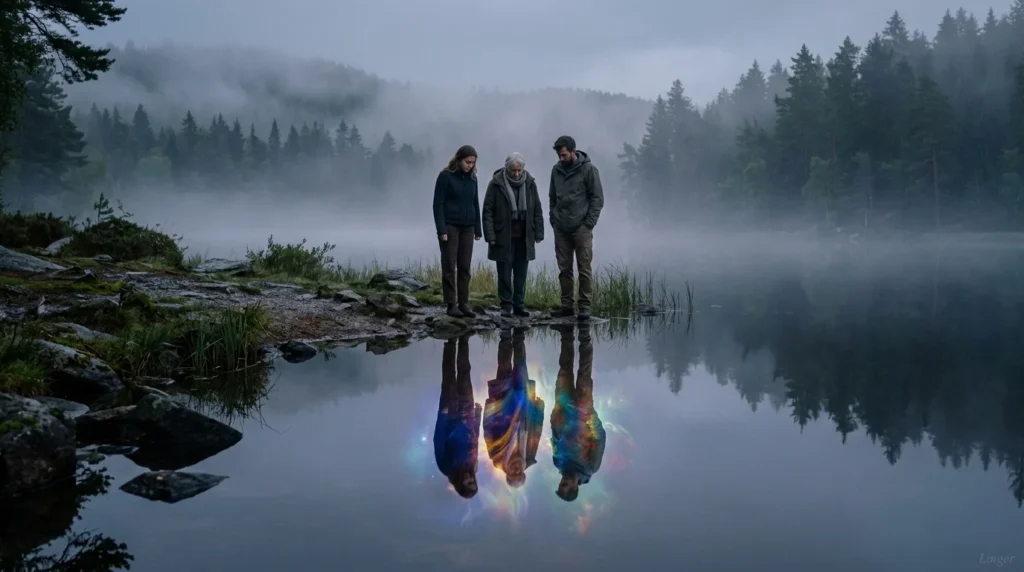
Purgatory is often understood as a place or state between two conditions, where someone must wait, suffer, or be purified before reaching peace. In everyday language, the idea can also describe a painful emotional state where a person feels stuck, exhausted, uncertain, or unable to move forward.
A metaphor for purgatory can make this difficult feeling easier to understand. Instead of simply saying, “I feel trapped,” you can describe the experience as a room with no doors, a road that never ends, or a storm that refuses to pass.
People search for metaphors about purgatory because emotional suffering can be difficult to explain with ordinary words. A metaphor gives that invisible pain a clear image.
From real-life experience, people sometimes feel caught between what they want and what they have. In everyday conversations, someone may describe a difficult period as “being stuck in limbo.” Creative writers often use images of darkness, endless roads, locked rooms, storms, and waiting to show emotional pain.
In this article, you will find 29 simple and relatable metaphors for purgatory. They can help you describe regret, loneliness, uncertainty, emotional exhaustion, waiting, and the feeling of being unable to escape a difficult situation.
Definition and Meaning
A metaphor for purgatory is a figurative comparison that describes a painful state of waiting, uncertainty, emotional suffering, or feeling trapped.
The word purgatory has a religious meaning, but it is also used more broadly in everyday writing and speech.
For example:
“This waiting room is my purgatory.”
This does not necessarily mean the room is literally purgatory. It means the person feels stuck there, waiting for something to change.
A metaphor helps readers understand the emotional experience behind the word.
Imagine someone who has lost an important relationship but cannot accept that it is over. They may feel caught between the past and the future. They are not living comfortably in the past, but they are not ready to move forward either.
That emotional state can be described as purgatory.
How Does a Purgatory Metaphor Work?
A metaphor connects emotional suffering with something familiar.
For example:
- A locked room represents feeling trapped.
- An endless road represents a difficult journey with no clear ending.
- A waiting room represents uncertainty.
- A dark tunnel represents suffering before hope.
- A broken bridge represents being unable to move from one stage of life to another.
- A storm represents emotional pain and confusion.
The comparison gives the reader something concrete to imagine.
Instead of explaining every detail of someone’s emotional suffering, a writer can create one strong image that communicates the feeling.
Why Do People Use Purgatory Metaphors?
People use metaphors because emotional experiences are often difficult to describe directly.
Saying “I feel stuck” is clear, but it is also very simple.
Saying “I am standing on a road that never ends” gives the reader a stronger sense of frustration and exhaustion.
Metaphors are especially useful when writing about:
- regret
- heartbreak
- loneliness
- grief
- uncertainty
- emotional exhaustion
- difficult choices
- waiting
- failure
- feeling trapped
- personal struggles
A good metaphor does not need to be complicated. Simple images can often be the most powerful.
Why We Use Metaphor for Purgatory
The idea of purgatory works especially well as a metaphor because it represents a state between suffering and peace.
A person may know that their current situation is painful but still feel unable to leave it. They may be waiting for an answer, trying to heal from the past, or hoping for a better future.
In Daily Conversations
People sometimes use purgatory-like metaphors when talking about difficult periods.
For example, someone waiting for an important decision may say they feel as if they are “stuck in a waiting room.”
The expression is easy to understand because everyone knows what it feels like to wait without knowing what will happen next.
In Creative Writing
Creative writers often use metaphors to show emotional pain instead of simply naming it.
A character who is dealing with regret might live emotionally inside “a house with no exits.”
The house is not literally trapping the character. It represents the person’s inability to escape their thoughts.
In Storytelling
Metaphors can show what a character feels inside without lengthy explanations.
A character who keeps returning to the same painful memory might be described as walking around the same empty street.
The image suggests that the character is emotionally stuck.
In Poems
Poetry often explores difficult emotions through images.
Purgatory can become a:
- desert
- prison
- frozen lake
- dark tunnel
- burning room
- broken bridge
- silent waiting room
The poet can choose an image that matches the exact emotion.
In Essays
Personal essays can use metaphors to explain difficult experiences.
For example, a writer discussing a period of uncertainty might compare it to standing at a crossroads without knowing which road to take.
The metaphor adds emotion while keeping the writing understandable.
In Social Media Captions
Short metaphors can express complicated feelings in only a few words.
A caption such as “Some days feel like a waiting room with no clock” can communicate uncertainty and emotional exhaustion without a long explanation.
In Professional Communication
Metaphors can be useful in speeches, presentations, and reflective professional writing.
However, they should remain clear and appropriate. A simple metaphor is usually better than a dramatic or confusing one.
Best Metaphor for Purgatory Examples
Here are 29 simple and powerful metaphors for describing emotional suffering, uncertainty, and feeling trapped.
1. Purgatory Is a Room With No Doors
Meaning: It represents feeling trapped in a painful situation with no obvious way out.
Example sentence: My sadness felt like a room with no doors.
Alternatives: emotional prison; trapped room
2. Purgatory Is an Endless Road
Meaning: It represents a difficult experience that seems to have no ending.
Example sentence: My recovery felt like an endless road through the dark.
Alternatives: never-ending journey; road without an end
3. Purgatory Is a Waiting Room With No Clock
Meaning: It represents uncertainty and painful waiting.
Example sentence: Those uncertain months felt like a waiting room with no clock.
Alternatives: endless waiting room; timeless wait
4. Purgatory Is a Dark Tunnel
Meaning: It represents moving through emotional pain without seeing a clear way forward.
Example sentence: Her grief felt like a dark tunnel with no light ahead.
Alternatives: tunnel of sorrow; path through darkness
5. Purgatory Is a Locked Cage
Meaning: It represents feeling emotionally trapped.
Example sentence: His regret became a locked cage around his thoughts.
Alternatives: emotional cage; prison of regret
6. Purgatory Is a Storm That Never Ends
Meaning: It represents ongoing emotional pain and confusion.
Example sentence: The breakup felt like a storm that never ended.
Alternatives: endless storm; constant emotional storm
7. Purgatory Is a Bridge With No Other Side
Meaning: It represents being caught between two stages of life.
Example sentence: I felt as if I were standing on a bridge with no other side.
Alternatives: broken bridge; unfinished crossing
8. Purgatory Is Walking in Circles
Meaning: It represents repeating the same thoughts or problems without making progress.
Example sentence: My regret made life feel like walking in circles.
Alternatives: endless loop; circular path
9. Purgatory Is a Heavy Chain
Meaning: It represents emotional pain that keeps someone from moving forward.
Example sentence: My past became a heavy chain around my heart.
Alternatives: weight of regret; emotional burden
10. Purgatory Is a Frozen Road
Meaning: It represents a life situation where everything feels unable to move.
Example sentence: After the loss, my life felt like a frozen road.
Alternatives: stalled journey; frozen path
11. Purgatory Is a Desert Without a Map
Meaning: It represents loneliness and uncertainty about where to go next.
Example sentence: Starting over felt like crossing a desert without a map.
Alternatives: lonely wilderness; directionless journey
12. Purgatory Is a Clock That Won’t Move
Meaning: It represents a painful period that seems to last forever.
Example sentence: During those difficult weeks, my life felt like a clock that would not move.
Alternatives: frozen time; endless moment
13. Purgatory Is a House Full of Echoes
Meaning: It represents being surrounded by memories that keep returning.
Example sentence: My old memories turned my mind into a house full of echoes.
Alternatives: room of memories; echoing past
14. Purgatory Is a Shadow That Follows You
Meaning: It represents emotional pain that remains with someone.
Example sentence: My regret became a shadow that followed me everywhere.
Alternatives: lingering shadow; past that follows
15. Purgatory Is a Fire Without Warmth
Meaning: It represents painful emotions that hurt without bringing comfort.
Example sentence: Her guilt felt like a fire without warmth.
Alternatives: cold fire; burning regret
16. Purgatory Is a Ship Without a Harbor
Meaning: It represents having no clear destination or place of peace.
Example sentence: After losing his direction, he felt like a ship without a harbor.
Alternatives: lost vessel; journey without a destination
17. Purgatory Is a Maze With No Exit
Meaning: It represents confusion and the inability to find a solution.
Example sentence: My thoughts became a maze with no exit.
Alternatives: mental maze; endless puzzle
18. Purgatory Is a Weight on the Heart
Meaning: It represents emotional pain that is difficult to carry.
Example sentence: The memory became a weight on her heart.
Alternatives: burden of sadness; heavy heart
19. Purgatory Is an Empty Train Station
Meaning: It represents waiting alone for change that may not come.
Example sentence: That lonely period felt like an empty train station.
Alternatives: lonely platform; abandoned station
20. Purgatory Is a Door That Never Opens
Meaning: It represents constantly hoping for change but remaining stuck.
Example sentence: Every opportunity felt like a door that never opened.
Alternatives: locked opportunity; closed door
21. Purgatory Is a River With No Shore
Meaning: It represents drifting through emotional uncertainty.
Example sentence: After the loss, life felt like a river with no shore.
Alternatives: endless current; drifting river
22. Purgatory Is a Cloud That Won’t Lift
Meaning: It represents sadness that remains for a long time.
Example sentence: Her sadness felt like a cloud that would not lift.
Alternatives: cloud of sorrow; lasting darkness
23. Purgatory Is a Broken Compass
Meaning: It represents wanting to move forward but not knowing which direction to choose.
Example sentence: Fear left me with a broken compass.
Alternatives: lost direction; uncertain path
24. Purgatory Is a Prison Made of Memories
Meaning: It represents being trapped by painful memories of the past.
Example sentence: His mind became a prison made of memories.
Alternatives: memory prison; cage of the past
25. Purgatory Is a Staircase With No Top
Meaning: It represents making effort without feeling that the struggle is ending.
Example sentence: Healing sometimes felt like climbing a staircase with no top.
Alternatives: endless climb; never-ending stairs
26. Purgatory Is a Window You Cannot Reach
Meaning: It represents seeing hope but feeling unable to reach it.
Example sentence: Hope felt like a window I could see but never reach.
Alternatives: unreachable hope; distant escape
27. Purgatory Is a Room Filled With Questions
Meaning: It represents uncertainty and the lack of clear answers.
Example sentence: My future felt like a room filled with questions.
Alternatives: sea of questions; unanswered maze
28. Purgatory Is a Wound That Won’t Close
Meaning: It represents emotional pain that has not healed.
Example sentence: The old betrayal felt like a wound that would not close.
Alternatives: lasting wound; open emotional wound
29. Purgatory Is a Season That Refuses to Change
Meaning: It represents a difficult period that seems to continue without improvement.
Example sentence: Those lonely months felt like a season that refused to change.
Alternatives: endless season; unchanging chapter
Real-Life Conversations
The following conversations show how metaphors for purgatory can sound natural in everyday situations.
1. Friends Talking
Aisha: You seem quiet today. Everything okay?
Maya: I’m just tired of waiting for things to change.
Aisha: What’s making you feel that way?
Maya: My life feels like a waiting room with no clock. I don’t know what comes next.
Aisha: I understand. But you don’t have to figure everything out today.
Maya: I know. I just want to feel like I’m moving again.
2. Student and Teacher
Student: I keep thinking about my mistake in the competition.
Teacher: You need to let yourself move forward.
Student: I know, but my thoughts feel like a maze with no exit.
Teacher: Then take one step at a time. You don’t have to solve the whole maze today.
Student: I’ll try to focus on what I can change now.
Teacher: That’s a good place to start.
3. Workplace Colleagues
Daniel: How is the project going?
Omar: Honestly, it feels like an endless road.
Daniel: Are you still waiting for the final decision?
Omar: Yes. We cannot move forward until we get an answer.
Daniel: That sounds frustrating.
Omar: It is. I feel like I’m standing at a door that never opens.
Daniel: Hopefully, we get the answer soon.
Everyday Usage Guide
Metaphors about purgatory can work in many types of writing, but the image should match the situation.
Using Metaphors in Speaking
Use short and familiar metaphors when talking with friends, family, or coworkers.
Expressions about waiting rooms, locked doors, storms, roads, and heavy weights are easy to understand.
For casual conversations, you do not need to explain the metaphor unless someone does not understand it.
Using Metaphors in Essays
Metaphors can make personal and reflective essays more engaging.
If you are writing about a difficult period, choose one image that represents your experience.
For example, you might build the entire paragraph around a road, room, storm, or journey.
Try not to use too many unrelated metaphors in the same paragraph. A consistent image usually makes writing stronger.
Using Metaphors in Poems
Poetry gives you plenty of room to use emotional images.
A poet can turn purgatory into a frozen lake, endless road, silent room, or dark tunnel.
You can also develop one metaphor throughout an entire poem. This creates a stronger connection between the beginning and ending.
Using Metaphors in Instagram and Facebook Captions
Social media captions often work best when they are short.
A simple metaphor can express an emotional experience without explaining every detail.
For example, an image of an endless road can communicate the feeling of being stuck while still leaving room for the reader to interpret the emotion.
Using Metaphors in Professional Writing
Use metaphors carefully in professional settings.
A clear metaphor can make a presentation or speech memorable. However, formal reports, instructions, and technical documents usually require direct language.
If a metaphor could confuse your audience, replace it with a straightforward explanation.
Common Mistakes
| Wrong usage | Correct version | Short explanation |
|---|---|---|
| My life is like a prison. | My life is a prison. | The first sentence is a simile; the second is a metaphor. |
| My sadness is a sunny rainbow prison. | My sadness is a dark room. | Avoid mixing images that do not naturally fit together. |
| My life is a road, ocean, prison, storm, and train. | Choose one main image. | Too many metaphors can make writing confusing. |
| Purgatory means being happy and free. | Purgatory can represent feeling trapped or suffering. | The metaphor should match the intended meaning. |
| My regret is a beautiful cage that flies. | My regret is a heavy chain. | Use images that readers can easily understand. |
| I am literally living in purgatory when describing an ordinary difficult day. | My difficult day feels like purgatory. | Be clear when using a figurative meaning. |
| My sadness is a locked door that swims. | My sadness is a locked door. | Avoid combining unrelated actions and objects. |
A strong metaphor should be clear, relevant, and easy to picture.
The best metaphor is not always the most dramatic one. A simple image such as a locked door may express emotional suffering more effectively than a complicated comparison.
Frequently Asked Questions
What does a metaphor for purgatory mean?
It describes a painful or uncertain emotional state by comparing it with a familiar image.
What are common metaphors about purgatory?
Common images include locked rooms, endless roads, waiting rooms, dark tunnels, storms, cages, and broken bridges.
Why is purgatory useful as a metaphor?
It can describe situations where someone feels trapped, uncertain, emotionally tired, or caught between the past and future.
Is purgatory the same as feeling stuck?
Not exactly. Purgatory can represent feeling stuck, but it can also suggest waiting, suffering, uncertainty, or a difficult period of change.
How can I create my own metaphor for purgatory?
Think about the exact emotion you want to describe, then connect it to a familiar place, object, journey, or situation.
Can I use purgatory metaphors in formal writing?
Yes. Clear and relevant metaphors can work in formal writing, although direct language is usually better for highly technical or official documents.
Conclusion
A powerful metaphor for purgatory can turn emotional suffering into an image readers can understand. A locked room can represent feeling trapped, an endless road can represent a long struggle, and a waiting room can represent uncertainty. These metaphors about purgatory help describe difficult emotions without relying on simple statements.
Use these creative ways to describe emotional suffering in conversations, stories, poems, essays, and captions. When you choose a simple image that matches the feeling, your writing can become clearer, more relatable, and more memorable.