
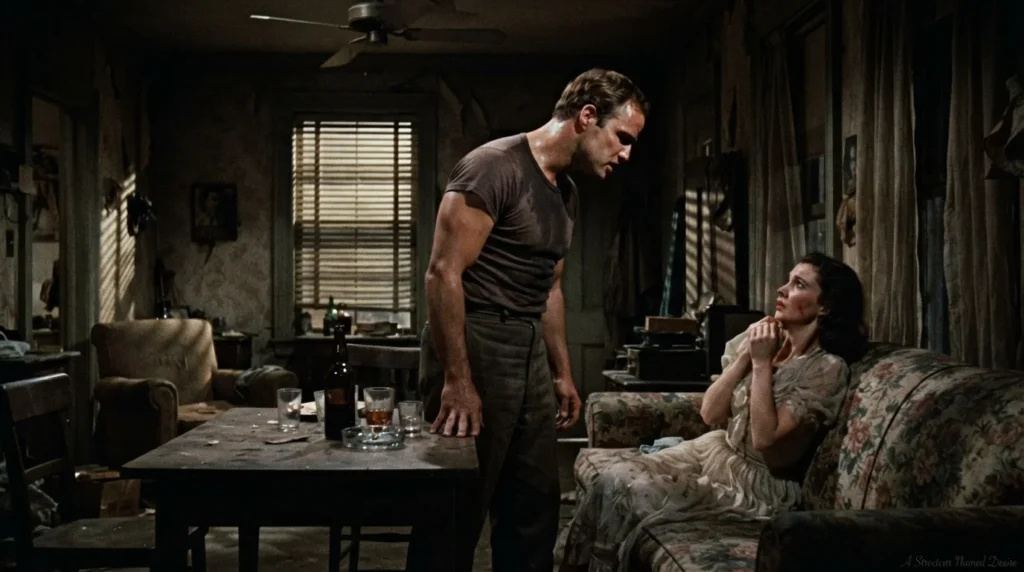
A Streetcar Named Desire metaphors are some of the most powerful examples of symbolism in modern literature. Tennessee Williams’ famous play uses objects, characters, settings, and repeated images as metaphors to explore deeper human emotions. Readers often search for A Streetcar Named Desire symbolism because the play is not only about the conflict between Blanche DuBois and Stanley Kowalski; it is also about dreams, survival, identity, desire, and the painful clash between fantasy and reality.
The title itself is a major metaphor. The streetcar named Desire represents the journey of human longing and the choices that lead people toward unexpected destinations. Throughout the play, Williams uses light, bathing, music, clothing, flowers, and the contrast between old and new worlds to reveal the characters’ inner struggles.
Understanding these metaphors helps students, readers, and literature lovers discover the hidden meanings behind the story. This guide explains important A Streetcar Named Desire metaphors, their meanings, examples, and how they connect to the play’s major themes.
Definition & Meaning
A metaphor is a comparison that describes one thing as another to create a deeper meaning.
In A Streetcar Named Desire, metaphors are used to represent:
- Human desires
- Emotional struggles
- Social changes
- Lost dreams
- Personal identity
- Conflict between illusion and reality
The play’s symbols are not just decorative. They reveal the fears, hopes, and weaknesses of the characters.
Why Tennessee Williams Uses Metaphors
Tennessee Williams uses metaphors to show ideas that cannot be easily explained directly.
The metaphors help readers understand:
- Blanche’s struggle to protect her illusions
- Stanley’s connection to power and reality
- Stella’s conflict between love and loyalty
- The decline of old social values
- The emotional damage caused by desire
From a literary perspective, the play’s metaphors turn ordinary objects and situations into representations of larger human experiences.
89+ A Streetcar Named Desire Metaphors and Symbolic Meanings
| Metaphor | Meaning | Example | Other Ways to Say |
|---|---|---|---|
| The Streetcar Desire | Human longing and the path created by choices | Desire carries characters toward unexpected outcomes. | Journey of passion, path of longing |
| The Streetcar Cemeteries | Connection between desire, loss, and death | The journey moves through memories and suffering. | Past burdens, emotional ruins |
| The Streetcar Journey | Life’s unpredictable direction | Blanche’s journey represents emotional decline. | Life path, personal struggle |
| The Light | Truth and reality | Blanche avoids harsh light because she fears exposure. | Reality, truth, revelation |
| The Paper Lantern | Hidden truth and false appearance | Blanche uses the lantern to cover reality. | Illusion, disguise, false beauty |
| The Darkness | Escape from painful reality | Blanche hides in darkness to protect herself. | Denial, secrecy, fantasy |
| The Bathing Ritual | Attempt at renewal | Blanche repeatedly bathes to feel refreshed. | Cleansing, escape, rebirth |
| The Mirror | Self-image and identity | Blanche’s reflection represents her fragile identity. | Self-view, appearance |
| The White Clothing | Desire for innocence | Blanche’s white clothes suggest purity and elegance. | Clean image, false innocence |
| The Old Belle Reve Estate | Lost past and fading status | Belle Reve represents Blanche’s connection to history. | Lost home, vanished glory |
| The Kowalski Apartment | Modern reality | The apartment represents a harsh new world. | Practical life, reality |
| The Flower Metaphor | Fragility and beauty | Blanche is compared to something delicate. | Vulnerability, softness |
| The Moth | Fragile attraction to light | Blanche resembles a moth drawn toward danger. | Delicate creature, vulnerable soul |
| The Music | Emotional memory | The music reveals Blanche’s painful past. | Inner voice, emotional echo |
| The Blue Piano | Desire and sadness | The music creates an atmosphere of longing. | Emotional background, sorrowful rhythm |
| The Poker Game | Masculine power struggle | The game reflects Stanley’s dominance. | Competition, control |
| The Animal Imagery | Raw human instinct | Stanley is often compared to animal strength. | Primitive power, physical force |
| The Storm | Emotional conflict | The storm reflects tension between characters. | Chaos, struggle |
| The Heat | Emotional pressure | The heat increases the feeling of conflict. | Tension, discomfort |
| The Cracked Foundation | Broken identity | Blanche’s life is built on painful memories. | Emotional damage, instability |
| The Dream World | Escape from reality | Blanche creates fantasies to survive. | Illusion, fantasy |
| The Broken Flower | Lost innocence | Blanche’s past affects her present. | Damaged beauty, lost purity |
| The Fragile Glass | Emotional weakness | Blanche’s personality is easily shattered. | Vulnerability, weakness |
| The Mask | False identity | Blanche hides her true self behind appearances. | Disguise, performance |
| The Mirror of Society | Social judgment | The characters reflect social expectations. | Cultural reflection, social pressure |
Major Symbolic Metaphors Explained
The Streetcar Named Desire as a Metaphor
The title is the most important metaphor in the play.
The streetcar represents:
- Human desire
- Personal choices
- Emotional journeys
- Consequences of passion
Blanche’s arrival through the streetcar suggests that her desires and past decisions have brought her to a new stage of life.
Light as a Metaphor for Truth
Light represents reality and honesty.
Blanche avoids bright light because she does not want people to see her age, mistakes, and painful history. The metaphor shows how people sometimes hide from truths they cannot accept.
The Paper Lantern as a Metaphor for Illusion
The paper lantern placed over the light represents Blanche’s attempt to control how others see her.
It symbolizes:
- False appearances
- Protection from judgment
- Self-created fantasy
Real-Life Conversations
Literature Class
Student: Why is the streetcar important in the play?
Teacher: It represents desire and the journey created by human choices.
Student: So it is more than transportation?
Teacher: Exactly. It represents Blanche’s emotional journey.
Friends Discussing the Play
Emma: I think Blanche lives in her own fantasy.
Liam: Yes, the darkness and paper lantern show how she avoids reality.
Book Club Discussion
Member 1: Why does Williams use so many symbols?
Member 2: Because objects reveal emotions that characters cannot say directly.
Everyday Usage of These Metaphors
The themes and metaphors from A Streetcar Named Desire can be used when discussing:
- Human emotions
- Personal struggles
- Relationships
- Identity
- Social change
- Literature analysis
Examples:
Instead of:
Someone is hiding the truth.
You can say:
They are living behind a paper lantern.
Instead of:
Someone is controlled by desire.
You can say:
They are riding their own streetcar of desire.
Common Mistakes
| Mistake | Correction |
|---|---|
| Thinking symbols have only one meaning | Literature often allows multiple interpretations. |
| Ignoring character emotions | Symbols connect to psychological struggles. |
| Studying objects without context | Always connect symbols to themes. |
| Treating Blanche as only weak | She is a complex character with many layers. |
Multiple Choice Questions
Q1: What does the streetcar named Desire symbolize?
A. A normal journey
B. Human longing and choices
C. A vacation
D. A train station
Answer: B
Q2: What does light represent in the play?
A. Reality and truth
B. Wealth
C. Happiness
D. Friendship
Answer: A
Q3: The paper lantern represents:
A. Illusion and hiding reality
B. Strength
C. Anger
D. Nature
Answer: A
Q4: Blanche’s avoidance of light shows:
A. Fear of truth
B. Love of nature
C. Confidence
D. Curiosity
Answer: A
Q5: The play mainly explores the conflict between:
A. Fantasy and reality
B. Summer and winter
C. City and country
D. Work and school
Answer: A
Frequently Asked Questions
Q1: What is the main metaphor in A Streetcar Named Desire?
The main metaphor is the streetcar itself, which represents desire, choices, and the journey of life.
Q2: What does Blanche symbolize in the play?
Blanche symbolizes fading beauty, fragile identity, and the struggle to escape painful reality.
Q3: What does Stanley represent?
Stanley represents physical power, realism, and the changing social world.
Q4: Why is light important in A Streetcar Named Desire?
Light represents truth and reality, which Blanche tries to avoid.
Q5: What does the paper lantern symbolize?
The paper lantern symbolizes illusion, disguise, and the desire to hide painful truths.
Q6: Why are metaphors important in the play?
Metaphors help reveal deeper themes about identity, desire, conflict, and human weakness.
Conclusion
The metaphors in A Streetcar Named Desire transform a simple family conflict into a deeper exploration of human nature. Through symbols like the streetcar, light, darkness, music, and the paper lantern, Tennessee Williams explores desire, illusion, reality, and emotional survival.
Understanding these metaphors helps readers see why the play remains powerful. The symbols are not only part of Blanche and Stanley’s world; they reflect struggles that many people experience when facing change, loss, and difficult truths.